
When designing a home, one question can have a surprisingly significant impact on both aesthetics and functionality: should you choose custom built-ins or freestanding furniture?
Both have a place in thoughtful interior design. Freestanding furniture offers flexibility and can introduce distinctive decorative pieces into a room. Custom built-ins, however, offer something entirely different. Because they are designed specifically for the architecture and dimensions of a space, they can maximize storage, create visual continuity, solve challenging layouts, and make an interior feel more intentional.
For New York City homes in particular, where every square foot counts, custom built-ins can completely change the way a room functions. From floor-to-ceiling libraries and entertainment centers to home offices, banquettes, wardrobes, and custom storage, architectural millwork allows homeowners to turn otherwise unused space into something both practical and beautiful.
At New York Custom Interior Millwork, we create custom millwork for NYC homes that is tailored to the property, the interior design, and the people who live there. So, when deciding between built-in cabinetry and freestanding furniture, which option is right for your home?
What Are Custom Built-Ins?
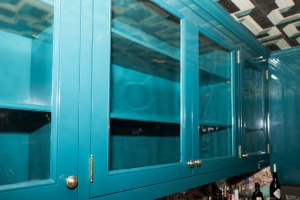
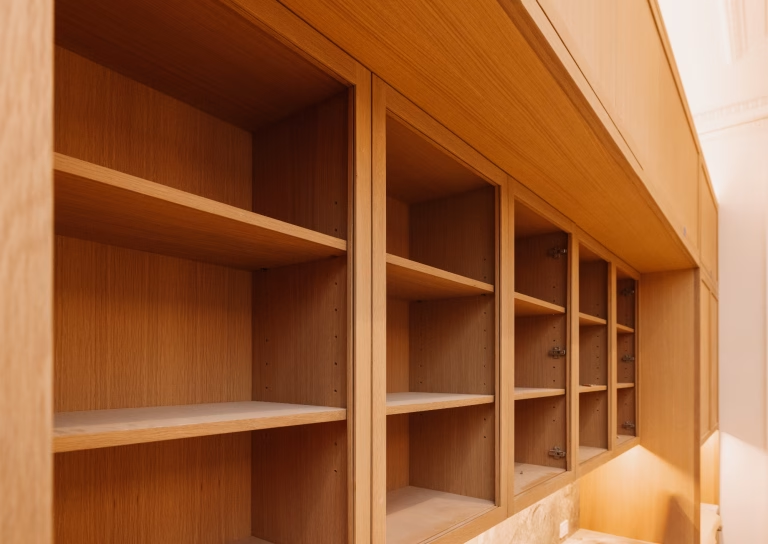
Custom built-ins are cabinetry, shelving, seating, storage, or other millwork elements designed specifically for a particular location within a home.
Rather than being manufactured according to standard furniture dimensions, a custom built-in is measured and fabricated to fit the exact space.
Examples of custom built-ins include:
Floor-to-ceiling bookcases
Custom entertainment centers
Built-in home offices
Window seats
Dining room credenzas
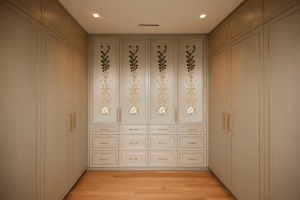
Custom wardrobes
Mudroom storage
Built-in banquettes
Fireplace surrounds with shelving
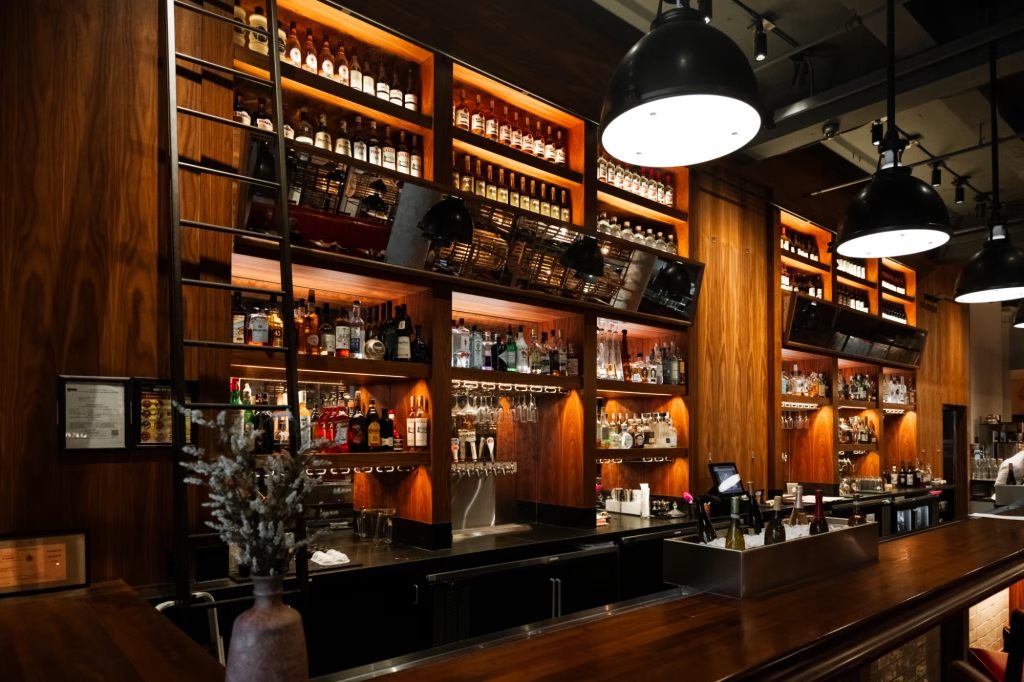
Custom bars
Wall-to-wall cabinetry
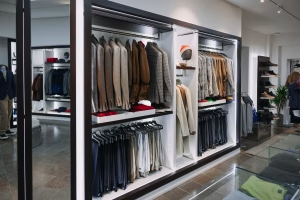
Integrated display storage
Because these features are designed for the room, they become part of the architecture rather than simply objects placed inside it.
What Is Freestanding Furniture?
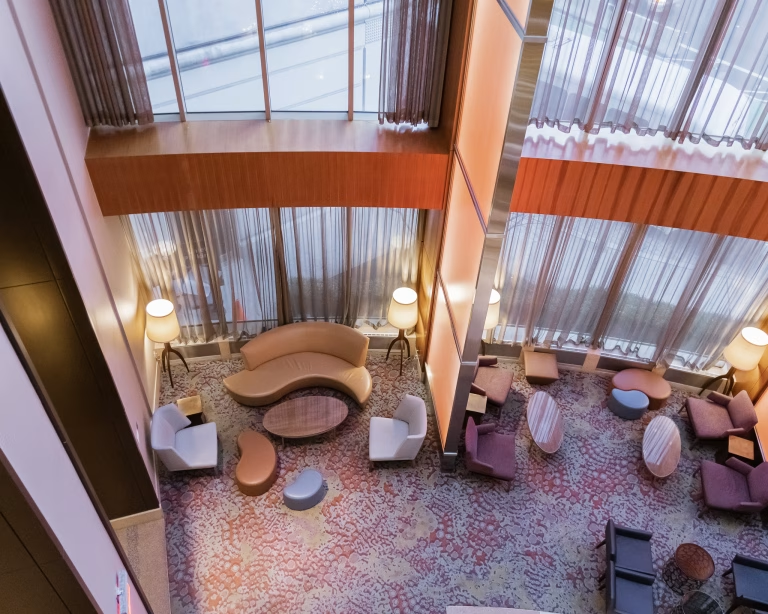
Freestanding furniture includes pieces that are not permanently attached to the architecture. Dressers, bookcases, armoires, desks, media consoles, and standalone cabinets are all examples.
One of the greatest benefits of freestanding furniture is flexibility. Pieces can be moved between rooms, repositioned when layouts change, or taken to a new home.
Freestanding pieces can also introduce contrast and personality. An antique cabinet, vintage credenza, or sculptural bookshelf may serve as a beautiful focal point precisely because it does not match the surrounding architecture.
The question is not whether freestanding furniture is good or bad. It is whether it provides the functionality and aesthetic you need for a particular space.
Custom Built-Ins Make Better Use of Available Space
One of the strongest arguments for custom built-ins is space efficiency.
Standard furniture is produced in predetermined dimensions. Even if a piece fits reasonably well, there may be unused space above it, beside it, or behind it.
Custom millwork can use the entire available area.
Cabinetry can extend from wall to wall and floor to ceiling. Shelving can wrap around windows or doorways. A narrow alcove can become a built-in workspace. An unused corner can provide valuable storage.
This is especially important for custom built-ins in NYC apartments, townhouses, and brownstones, where even a few additional inches of storage can make a meaningful difference.
Built-Ins Can Make Small Rooms Feel Larger
It may seem counterintuitive that adding cabinetry can make a room feel bigger, but thoughtfully designed built-ins often do exactly that.
Multiple freestanding pieces can visually break up a small room. A dresser, bookcase, media console, and storage cabinet each create their own lines, gaps, and proportions.
A single custom built-in can consolidate several of those functions into one cohesive architectural feature.
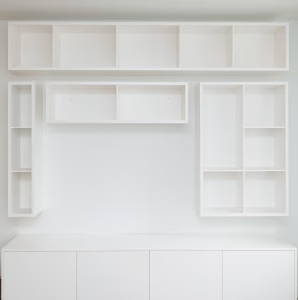
For example, an entire living room wall could incorporate a television, bookshelves, display niches, drawers, closed storage, and lighting. Instead of five individual pieces competing for space, everything is contained within one streamlined design.
The result can feel cleaner, calmer, and more spacious.
Custom Millwork Creates a More Cohesive Interior
Another major advantage of custom built-ins is visual continuity.
Because custom millwork is designed specifically for the home, materials, finishes, moldings, and proportions can coordinate with the surrounding architecture.
In a traditional NYC brownstone, built-in cabinetry might incorporate panel profiles and moldings inspired by original architectural details. In a contemporary Manhattan apartment, custom cabinetry could feature flush doors, subtle reveals, and natural wood veneer.
This allows the built-in to feel like an intentional extension of the room.
Freestanding furniture can certainly complement an interior, but it rarely achieves the same level of architectural integration.
Storage Can Be Designed Around Your Lifestyle
Standard furniture determines how you store your belongings. Custom cabinetry reverses that relationship by designing the storage around what you actually own.
A custom built-in can include dedicated storage for:
Books and collections
Media equipment
Children’s toys
Office supplies
Wine and glassware
Shoes and accessories
Electronics and charging stations
Artwork
Board games
Linens
Files and paperwork
Open shelving can display the things you want to see, while closed cabinetry conceals everything else.
The result is storage that feels more intuitive because it has been created specifically for the homeowner.
Built-Ins Can Solve Awkward Architectural Conditions
New York City homes are full of character, but that character often comes with challenging dimensions.
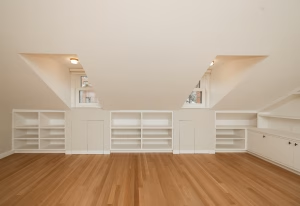
Radiators, structural columns, uneven walls, unusually high ceilings, narrow alcoves, and historic architectural details can make standard furniture difficult to place.
Custom millwork can turn these obstacles into opportunities.
A radiator enclosure can become additional display space. Cabinetry can be designed around a structural column. An awkward alcove can become a home office or reading nook. Floor-to-ceiling storage can take advantage of unusually high ceilings.
Instead of trying to hide challenging architecture, custom built-ins can integrate it into the design.
Freestanding Furniture Offers Greater Flexibility
There are situations where freestanding furniture is the better choice.
If you frequently rearrange rooms, anticipate moving in the near future, or enjoy changing your interiors regularly, movable furniture offers greater flexibility.
It can also be ideal for introducing antique, vintage, or collectible pieces into a space.
In fact, some of the most interesting interiors combine custom millwork with carefully selected freestanding furniture.
Custom built-ins establish the architectural framework of the room, while individual furniture pieces introduce personality, contrast, and flexibility.
The two approaches do not have to compete.
Built-Ins Can Incorporate Technology Seamlessly
Modern homes contain more technology than ever, but homeowners do not necessarily want to see all of it.
Custom entertainment centers and home office cabinetry can conceal wiring, routers, speakers, charging stations, printers, and other equipment.
Lighting can also be incorporated directly into shelving or cabinetry.
This creates cleaner sightlines and prevents technology from dominating the visual character of the room.
For luxury NYC interiors, this type of seamless integration can make an enormous difference.
Custom Built-Ins Add Architectural Character
Beyond functionality, built-ins can give otherwise simple rooms greater personality.
A floor-to-ceiling library can transform a blank living room wall. A custom fireplace surround can establish a strong focal point. A window seat can turn an unused area into a comfortable destination.
Architectural millwork introduces depth, texture, and permanence.
Rather than decorating around the architecture you have, custom millwork allows you to enhance the architecture itself.
Quality Matters
The advantages of built-ins depend heavily on how they are designed, fabricated, finished, and installed.
Precise measurements are essential. Materials must be selected appropriately for the application. Doors, drawers, shelving, hardware, and finishes must withstand everyday use. Installation must account for the actual conditions of the property.
High-quality custom millwork brings all of these considerations together.
The goal is not simply to fill a wall with cabinetry. It is to create something that looks beautiful, functions naturally, and feels like a permanent part of the home.
So, Which Is Better?
The answer depends on your goals.
Freestanding furniture is an excellent choice when flexibility, portability, or decorative variety is the priority. Custom built-ins are often the better solution when maximizing space, increasing storage, solving challenging layouts, or creating architectural cohesion matters most.
For many New York City homes, the ideal interior combines both.
Custom cabinetry and built-ins can establish a highly functional architectural foundation, while freestanding furniture provides flexibility and individual character.
At New York Custom Interior Millwork, we specialize in custom built-ins, cabinetry, architectural wall paneling, and residential millwork designed specifically for each property. From compact NYC apartments to expansive townhouses and luxury residences, our team creates custom woodwork that helps every square foot work harder without compromising beautiful interior design.
If you are considering custom built-ins for your home, contact New York Custom Interior Millwork at (718) 392-1600 or email liz@nycmillwork.com. Together, we can create storage and architectural features designed not for just any home, but specifically for yours.