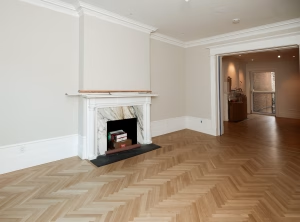

Pre-war apartments are some of the most distinctive homes in New York City. High ceilings, generous moldings, hardwood floors, traditional layouts, and beautifully proportioned rooms give these residences a character that is difficult to recreate in newer construction.
That character can also come with challenges.
Limited closet space, older kitchens, radiators, unusual wall dimensions, and layouts designed for another era do not always accommodate the way people live today. Renovating a pre-war apartment requires finding the right balance between preserving its architectural personality and introducing modern functionality.
Custom millwork can help achieve both.
From built-in bookcases and radiator covers to custom kitchen cabinetry, closets, wall paneling, home offices, and entertainment centers, architectural millwork can add storage and functionality while respecting the original character of the home.
New York Custom Interior Millwork creates custom millwork for NYC apartments with careful attention to architecture, proportion, materials, and everyday use. For pre-war homes in particular, the goal is not simply to make everything new. It is to create millwork that feels like it belongs.
Preserve the Details That Give Pre-War Apartments Character
Before adding new millwork, it is important to understand what makes the existing apartment special. Pre-war NYC apartments can feature substantial baseboards, crown moldings, decorative door casings, original fireplace surrounds, paneled doors, and other architectural details.
These elements provide valuable inspiration for new custom woodwork.
Rather than installing cabinetry that feels disconnected from the property, new millwork can reference existing proportions, profiles, or materials. A built-in bookcase might incorporate molding details that relate to the surrounding room. New cabinetry can align with existing doors and windows.
The goal does not have to be an exact reproduction of historic woodwork. A thoughtful interpretation can preserve the spirit of the apartment while making it appropriate for modern living.
Create Floor-to-Ceiling Built-In Bookcases
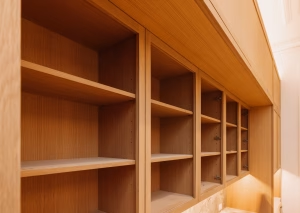
High ceilings are one of the great advantages of many pre-war Manhattan apartments. Custom floor-to-ceiling bookcases make use of that height while adding architectural presence to a living room, library, office, or hallway.
Depending on the design, built-ins can include:
Open bookshelves
Closed lower cabinetry
Integrated lighting
Display niches
Media storage
Drawers
Decorative moldings
Space for artwork
Concealed technology
Traditional detailing can make a new bookcase feel connected to the apartment’s history, while cleaner profiles can create an interesting contrast between classic architecture and contemporary design.
Either approach can turn a previously blank wall into a defining feature.
Transform Radiators into Architectural Features
Radiators are common in older New York City apartments, and they can be challenging to incorporate into a polished interior.
Custom radiator covers provide an opportunity to make these necessary elements feel more intentional.
Rather than treating the radiator as something to hide behind furniture, a custom enclosure can coordinate with surrounding cabinetry, moldings, or window details. The top can also provide a useful display surface, subject to the heating system’s requirements and appropriate design considerations.
In some rooms, radiator enclosures can be incorporated into larger custom built-ins, creating a continuous architectural feature across an entire wall. This is a good example of how custom millwork can turn an existing condition into part of the design.
Update the Kitchen Without Losing the Apartment’s Personality
A pre-war apartment may have beautiful architectural character throughout the living areas but a kitchen that no longer works for modern life.
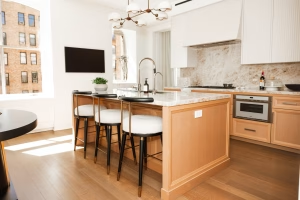
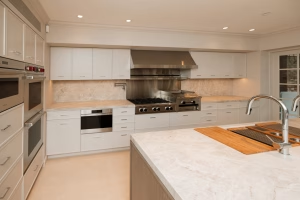
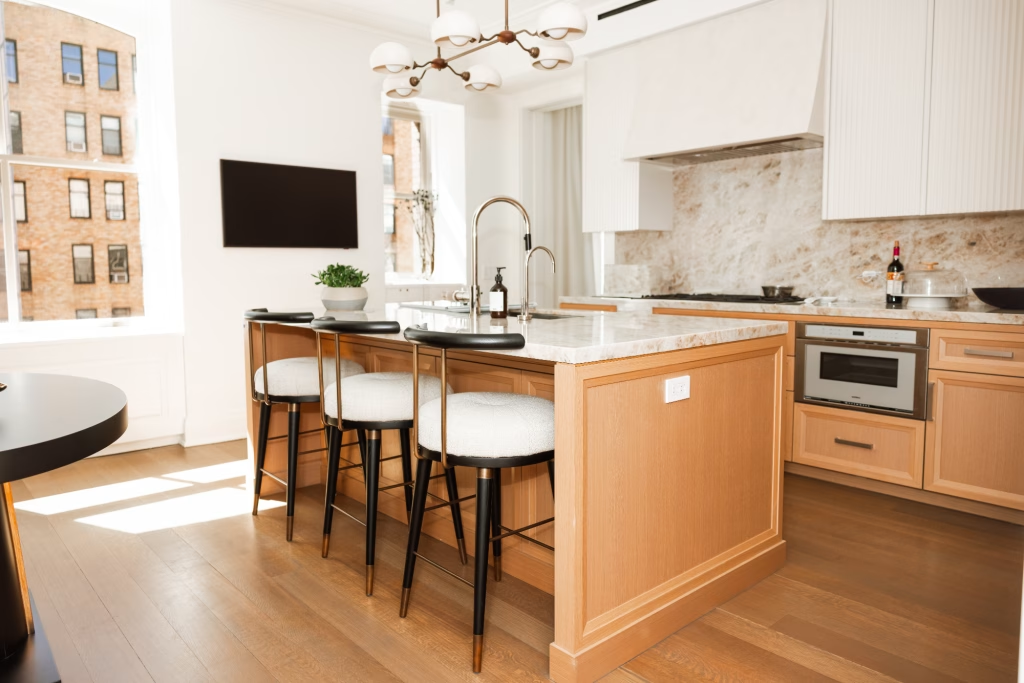
Custom kitchen cabinetry allows homeowners to improve storage and functionality while selecting a design appropriate for the property.
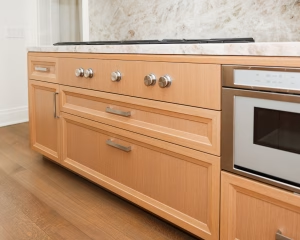
Traditional recessed-panel cabinetry can complement historic interiors, while streamlined cabinets can create a deliberate old-meets-new contrast. Custom cabinetry also makes it possible to work around the specific dimensions of an older building.
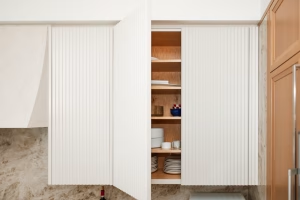
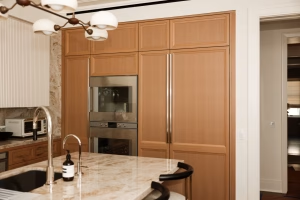
Floor-to-ceiling cabinets can take advantage of high ceilings. Unusual corners can be used more effectively. Panel-ready appliances can create cleaner sightlines, while custom pantry storage can help compensate for limited closet space elsewhere in the apartment.
The kitchen becomes modern where it needs to be without feeling disconnected from the rest of the home.
Add Storage Where the Original Floor Plan Lacks It
Many older apartments were designed at a time when people owned fewer belongings and had different expectations for storage. Today, limited closet space can be a major challenge.
Custom built-ins allow storage to be added without relying on bulky freestanding furniture.
A bedroom wall can become a custom wardrobe with hanging space, drawers, shoe shelving, and upper cabinets. A hallway can incorporate shallow storage. An entryway can provide concealed space for coats, bags, and shoes.
Because custom cabinetry is fabricated for the exact dimensions of the room, it can often provide considerably more useful storage than standard furniture.
In a New York City apartment, that efficiency matters.
Create a Library Around an Existing Fireplace
Original fireplaces are among the most beautiful features found in some pre-war NYC apartments. Custom millwork can help emphasize them.
Built-in bookcases or display cabinetry can be designed on either side of a fireplace to create symmetry and establish the wall as the focal point of the room.
The detailing can reference the existing mantel, moldings, or surrounding architecture so that the new elements feel naturally connected.
In a more contemporary renovation, simple built-ins can frame a traditional fireplace without attempting to replicate its detailing exactly.
Both approaches allow old and new elements to coexist while giving the room additional storage and architectural depth.
Incorporate a Home Office into Existing Architecture
Modern life has introduced a requirement that many pre-war floor plans never anticipated: the home office. Fortunately, creating a functional workspace does not always require a dedicated room.
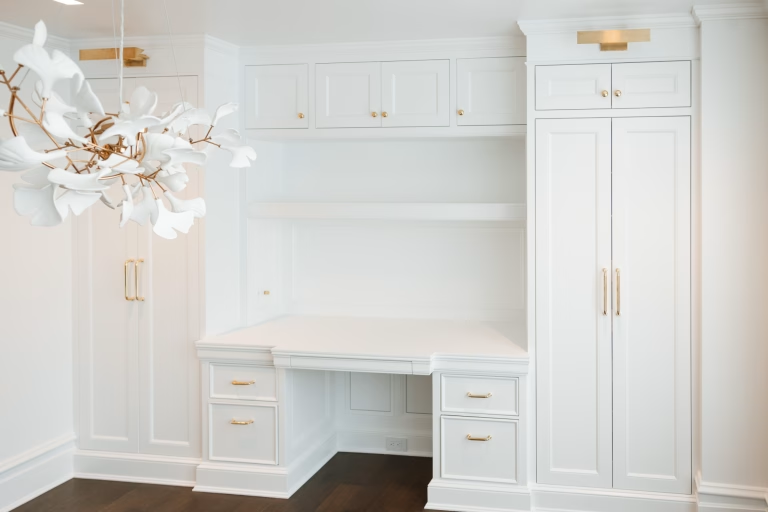
Custom millwork can transform an alcove, living room wall, bedroom corner, or other underused area into a built-in office.
A custom home office might include a desk surface, bookshelves, drawers, file storage, integrated lighting, and concealed areas for technology.
When the materials and detailing coordinate with the surrounding architecture, the workspace feels like part of the home rather than office furniture placed in the middle of a traditional room.
Use Custom Wall Paneling to Add Depth
Not every pre-war apartment still has its original architectural detailing. Previous renovations may have removed moldings, paneling, or other elements that once gave the rooms more character. Custom wall paneling can reintroduce depth and proportion.
Traditional wainscoting can create a classic appearance in dining rooms, hallways, and entryways. Full-height wood paneling can bring warmth to libraries or living rooms. Simplified panel molding can reference historic architecture while maintaining a lighter, more contemporary aesthetic.
The key is proportion.
Panel dimensions should respond to ceiling height, door locations, windows, and other architectural elements rather than being applied as an arbitrary decorative pattern.
Build a Banquette for Compact Dining
Pre-war layouts sometimes include breakfast areas, narrow kitchens, or dining spaces where conventional furniture is not the most efficient solution.
A custom banquette can provide comfortable seating while using less floor space than a collection of chairs. Storage can also be incorporated beneath the seating.
Banquettes can be designed in painted finishes, natural wood, or upholstered combinations that coordinate with nearby kitchen cabinetry and architectural details.
This approach can make an awkward corner significantly more useful without sacrificing the character of the apartment.
Create Custom Doors and Concealed Storage
Doors are an important part of pre-war architecture, particularly when they feature substantial moldings and traditional proportions. Custom millwork can introduce new storage while maintaining those architectural relationships.
A concealed storage cabinet might be incorporated into wall paneling. A custom door can match surrounding trim. Built-in cabinetry can use panel profiles inspired by nearby doors. These details help prevent modern storage solutions from feeling visually intrusive.
For a more contemporary interpretation, flush doors can also be incorporated into architectural paneling to create a clean contrast with traditional elements elsewhere in the apartment.
Combine Traditional Architecture with Contemporary Millwork
Renovating a pre-war apartment does not mean every new feature needs to look historic. Some of the most interesting NYC interiors combine original architectural details with modern custom millwork.
A room with traditional crown molding and herringbone flooring might feature minimalist white oak cabinetry. A historic fireplace could be paired with streamlined built-ins. A classic entryway could lead into a contemporary kitchen with flush custom cabinetry.
The contrast can highlight the beauty of both periods.
What matters is that the materials, proportions, and detailing are considered carefully enough that the old and new elements feel intentional rather than disconnected.
Let Materials Connect the Old and the New
Material selection can help create continuity throughout a renovated pre-war apartment.
Natural woods such as white oak, walnut, and maple can add warmth without necessarily making a space feel traditional. Painted finishes can complement existing moldings and trim. Glass, mirrors, metal, and stone can be incorporated into custom millwork to introduce more contemporary details.
Wood species, grain direction, stain color, hardware, and finish all influence how the new millwork relates to the existing architecture. The right material does not simply look attractive on its own. It should make sense within the larger interior.
Respect Proportion and Craftsmanship
Pre-war architecture often feels special because of its proportions and attention to detail. New architectural millwork should receive the same consideration.
Cabinetry should relate properly to ceiling heights. Built-ins should align thoughtfully with doors, windows, and fireplaces. Moldings should have the right scale for the room. Wood grain, hardware, reveals, and panel divisions should all feel deliberate.
This level of precision is what allows new millwork to coexist successfully with older architecture. The objective is not to make the new work appear old. It is to give it the same sense of intention.
Give a Pre-War NYC Apartment a New Chapter
The best pre-war apartment renovations do not erase the past. They adapt it.
Custom millwork can preserve architectural character while introducing the storage, organization, technology, and functionality modern homeowners expect. Built-in bookcases can take advantage of high ceilings. Custom wardrobes can solve limited closet space. Radiator covers can become architectural features. Kitchens can gain modern functionality while remaining connected to the rest of the home.
Each solution can be designed around the property rather than forcing the property to accommodate a standard product.
At New York Custom Interior Millwork, we bring decades of experience to custom residential millwork projects throughout New York City and beyond. We collaborate with homeowners, architects, interior designers, and contractors to create custom cabinetry, kitchens, built-ins, wall paneling, closets, home offices, radiator enclosures, and specialty architectural woodwork tailored to each interior.
If you are renovating a pre-war NYC apartment and want to introduce modern functionality while respecting its architectural character, contact New York Custom Interior Millwork at (718) 392-1600 or email liz@nycmillwork.com. With thoughtful design and skilled craftsmanship, a historic New York home can retain everything that makes it special while working beautifully for the way you live today.