
A well-designed interior should feel natural to move through. Rooms should connect without feeling disconnected, storage should be accessible without creating clutter, and architectural elements should help guide the eye from one area to another. When these details work together, the space feels effortless.
Custom millwork plays an important role in creating that experience.
From custom cabinetry and architectural wall paneling to built-in shelving, banquettes, reception desks, bars, and integrated storage, millwork can influence how people see, use, and move through an interior. It can establish visual connections between rooms, define separate zones within open layouts, and transform awkward architectural conditions into purposeful features.
In New York City, where interiors often need to balance limited square footage, unusual layouts, historic architecture, and modern functionality, thoughtful custom millwork can dramatically improve the flow of a space.
At New York Custom Interior Millwork, we create residential and commercial millwork designed around the architecture and purpose of each project. The goal is not simply to add beautiful woodwork. It is to create architectural elements that feel like they naturally belong within the space.
What Does Flow Mean in Interior Design?
Flow describes how naturally an interior connects from one area to another.
There is physical flow, which affects how people walk through and use a space. There is also visual flow, which determines how the eye moves across materials, colors, architectural details, and furnishings.
Both are important.
Poorly positioned furniture, oversized cabinetry, inconsistent architectural details, and excessive visual clutter can make an interior feel smaller or more complicated than it actually is.
Thoughtfully designed architectural millwork can have the opposite effect.
Custom cabinetry can organize storage along a wall instead of allowing furniture to interrupt circulation. Wall paneling can visually connect different areas. Built-ins can turn unused corners into purposeful features.
When millwork is considered as part of the overall architecture, it can help create an interior that feels more intuitive.
Custom Millwork Can Define Open Floor Plans
Open floor plans remain common in contemporary NYC apartments, lofts, offices, restaurants, and hospitality spaces.
While removing walls can create a sense of openness, it can also make it difficult to establish where one functional area ends and another begins.
Custom millwork can create those boundaries without closing off the space.
A kitchen island can establish the transition between the kitchen and living room. A custom banquette can define a dining area. Built-in shelving can create separation between a home office and living space. A custom bar can establish a destination within a larger hospitality environment.
These features give different areas their own identities while maintaining sightlines and openness.
This is one of the reasons custom millwork is so effective in interior architecture. It can organize space without necessarily dividing it.
Built-Ins Can Improve Physical Circulation
Freestanding furniture requires clearance around it and often creates unused gaps between the furniture and surrounding architecture.
In a large room, this may not be a significant concern. In a Manhattan apartment, Brooklyn brownstone, or compact commercial space, those inches can matter.
Custom built-ins are designed according to the dimensions of the room, which makes it possible to create storage without unnecessarily interrupting circulation.
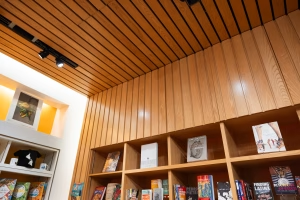
A shallow built-in bookcase can replace a deeper freestanding cabinet. A custom media center can consolidate several pieces of furniture along one wall. A window bench can provide seating without occupying the center of a room.
The result is often clearer walking paths and a more efficient floor plan.
Millwork Guides the Eye Through an Interior
Flow is not only about movement. It is also about what you see.
Architectural millwork can create visual lines that naturally draw attention through a space.
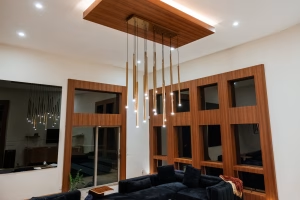
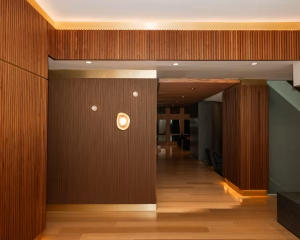
Wall paneling might continue from an entryway into a living room. A consistent wood finish can appear in cabinetry throughout several adjoining areas. Built-ins can align with windows, doorways, or ceiling details.
These relationships create visual continuity.
Instead of experiencing each room as a completely separate design, the eye recognizes subtle connections between spaces.
This is especially effective in luxury residential interiors, where cohesion often comes from repeating materials and details without making every room look identical.
Custom Cabinetry Can Reduce Visual Clutter
Even a beautifully designed space can feel chaotic when everyday items are constantly visible.
Custom cabinetry provides a way to organize those items without introducing multiple storage pieces throughout the room.
Built-in storage can conceal:
Media equipment and wiring
Office supplies and files
Children’s toys
Shoes and outerwear
Kitchen appliances
Glassware and bar accessories
Books and collections
Linens and household suppliesElectronics and charging stations
When these items have dedicated places, the architecture becomes easier to appreciate.
For modern interiors, flush cabinetry and concealed hardware can create particularly clean sightlines. In more traditional spaces, raised or recessed panels can add character while providing the same practical storage.
Reducing visual clutter helps create a calmer, more continuous experience from room to room.
Millwork Can Turn Transitional Areas Into Design Features
Hallways, entryways, corridors, and areas between rooms are sometimes treated as secondary spaces.
Custom architectural millwork can make them part of the larger design story.
An entryway can include built-in cabinetry for coats and shoes. A hallway can feature shallow wall paneling or display shelving. The transition between a living and dining area can incorporate a custom credenza or bar.
Instead of feeling like empty passages, these areas become functional extensions of the surrounding rooms.
This can be particularly valuable in NYC homes where every square foot has the potential to serve a purpose.
Materials Create Continuity
Material selection is another important part of establishing flow.
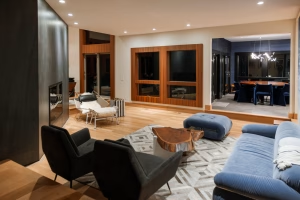
Repeating a wood species, finish, panel profile, or architectural detail can visually connect different areas of a property.
For example, rift-cut white oak used for kitchen cabinetry might appear again in a living room built-in. Walnut wall paneling in an entryway could relate to a custom dining room credenza. Painted cabinetry might use the same detailing as nearby doors and moldings.
The connection does not have to be obvious.
In fact, some of the most sophisticated interiors use subtle repetition rather than exact duplication.
Custom millwork gives architects and interior designers control over these relationships because materials and finishes can be coordinated across multiple features.
Millwork Can Solve Awkward Architectural Conditions
Good flow can be difficult to achieve when the architecture itself presents challenges.
Structural columns, radiators, uneven walls, alcoves, unusually placed windows, and mechanical elements can interrupt an otherwise straightforward layout.
Custom millwork can incorporate these conditions rather than forcing the rest of the design to work around them.
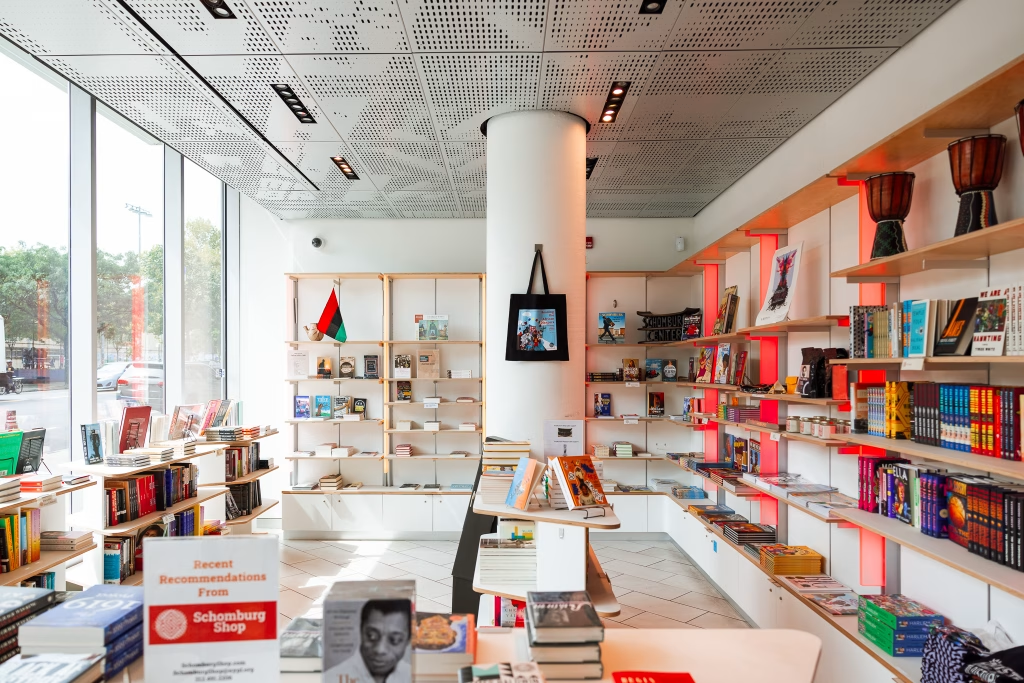
A structural column can become part of a shelving system. A radiator can be incorporated into a custom enclosure with a useful surface above. An awkward recess can become cabinetry or a built-in desk.
Instead of allowing challenging conditions to interrupt the space, millwork can help integrate them into the overall design.
Kitchens Depend on Thoughtful Flow
Flow is particularly important in custom kitchen design. A kitchen needs to support movement between preparation, cooking, cleaning, storage, and entertaining. Poorly planned cabinetry can make even a large kitchen frustrating to use.
Custom kitchen cabinetry can be designed around the homeowner’s specific routines and the dimensions of the room.
Drawers can be positioned where they are most useful. Pantry storage can be located near preparation areas. Appliances can be integrated into cabinetry. Islands can provide storage while also creating a natural transition to dining or living areas.
In open-concept NYC homes, custom millwork can also help the kitchen relate visually to the rest of the interior.
Rather than feeling like a separate utilitarian area, the kitchen becomes part of the overall architectural composition.
Hospitality Spaces Use Millwork to Direct the Guest Experience
Flow is just as important in commercial interiors. Restaurants, hotels, bars, retail stores, and amenity spaces need to guide people naturally while creating a memorable atmosphere.
Custom commercial millwork can subtly influence that movement.
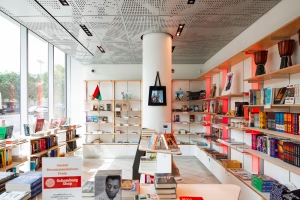
A reception desk establishes an arrival point. A restaurant bar can become a visual destination. Banquettes can organize seating and circulation. Retail displays can guide customers through merchandise areas. Hotel wall paneling and architectural details can create continuity between the lobby, lounge, and other shared spaces.
In these environments, millwork contributes to both function and experience. Guests may not consciously recognize why a space feels easy to navigate, but thoughtful architectural planning is often part of the reason.
Good Millwork Works With the Architecture
The most successful custom millwork does not feel as though it was added after the fact. It responds to the architecture.
Proportions relate to the room. Cabinetry aligns with windows and doors. Materials complement surrounding finishes. Built-ins support circulation rather than interfering with it.
This requires collaboration between architects, interior designers, contractors, millwork fabricators, and clients.
Detailed planning allows the millwork to address practical requirements while maintaining the original design intent.
When these elements are coordinated properly, cabinetry and architectural woodwork become part of the structure of the interior rather than simply furniture attached to a wall.
Flow Is About More Than Square Footage
Creating better flow does not necessarily mean creating more space. It means using existing space more intelligently.
A compact NYC apartment can feel comfortable and organized when storage is integrated into the architecture and circulation paths remain clear. A large luxury residence can feel more cohesive when millwork creates visual relationships between rooms. A restaurant can feel easier to navigate when bars, banquettes, and service areas are thoughtfully positioned.
Custom millwork gives designers the flexibility to address each of these situations individually. There is no single solution because every property has its own architecture, function, and personality.
Creating Spaces That Feel Naturally Connected
The best interior flow is often something people experience without consciously noticing it.
You enter a room and understand where to go. Storage is available where it is needed. Architectural details guide your attention naturally. Different areas feel distinct while still belonging to the same overall environment. Custom millwork helps create those relationships.
Through thoughtful cabinetry, built-ins, architectural wall paneling, custom kitchens, banquettes, bars, reception desks, and specialty woodwork, millwork can shape both the visual and physical experience of an interior.
At New York Custom Interior Millwork, we bring decades of experience to custom residential and commercial millwork projects throughout New York City and beyond. We collaborate with homeowners, architects, interior designers, contractors, and commercial clients to create architectural woodwork that supports the design, functionality, and natural flow of each space.
If you are planning a residential renovation, hospitality project, commercial interior, or other custom millwork project, contact New York Custom Interior Millwork at (718) 392-1600 or email liz@nycmillwork.com. Thoughtful millwork does more than fill a space. It can help every part of that space work together.