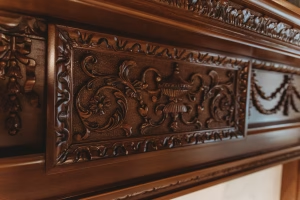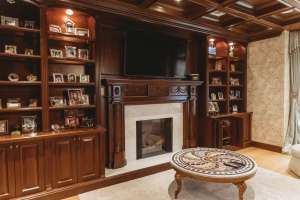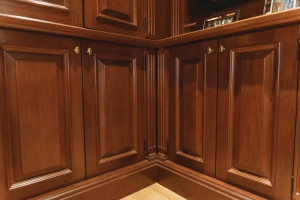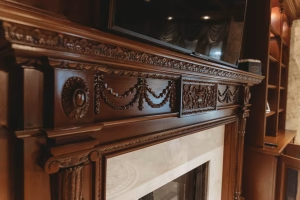

The most memorable interiors are rarely defined by one dramatic feature. More often, their impact comes from the details. The way wall paneling meets a doorway, the proportions of a custom built-in, the grain of a carefully selected wood veneer, or the profile of a molding can quietly influence how an entire room feels.
This is the art of architectural millwork.
Custom millwork gives an interior depth, personality, and a sense of permanence that furnishings and décor alone cannot always achieve. From custom cabinetry and built-in storage to wall paneling, moldings, fireplace surrounds, doors, and specialty woodwork, architectural details establish a visual language that can carry throughout an entire property.
At New York Custom Interior Millwork, we create custom millwork for residential and commercial interiors throughout New York City and beyond. Our work is rooted in the idea that details are never simply details. When thoughtfully designed and expertly fabricated, they are what turn an interior into a distinctive space.
What Are Architectural Details?
Architectural details are the elements that give structure, dimension, and character to an interior. Some serve a functional purpose, while others primarily enhance the visual experience. The best often accomplish both.
Architectural millwork can include elements such as:
Custom wall paneling
Crown and base moldings
Door and window casings
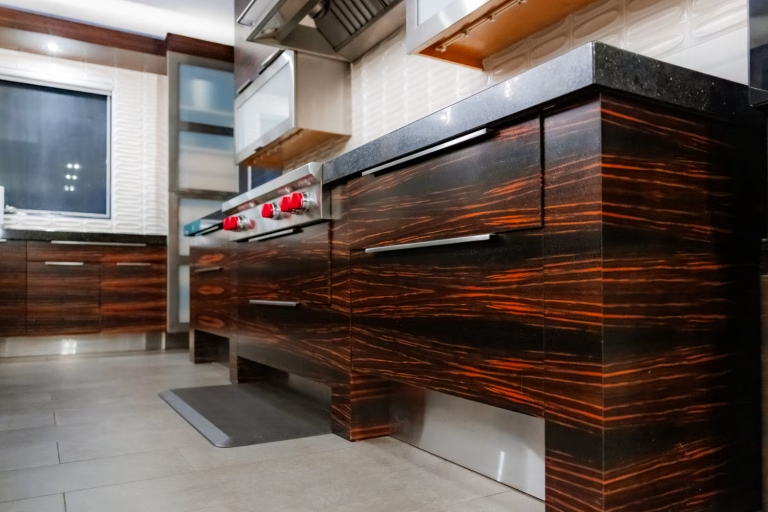
Custom cabinetry
Built-in bookcases
Fireplace surrounds and mantels
Custom doors
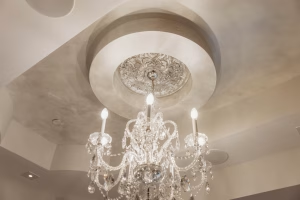
Ceiling treatments
Banquettes and integrated seating
Reception desks
Custom bars
Decorative wood accents
Individually, these features can make a beautiful statement. When they are considered together as part of a larger interior design, they can completely define the character of a space.
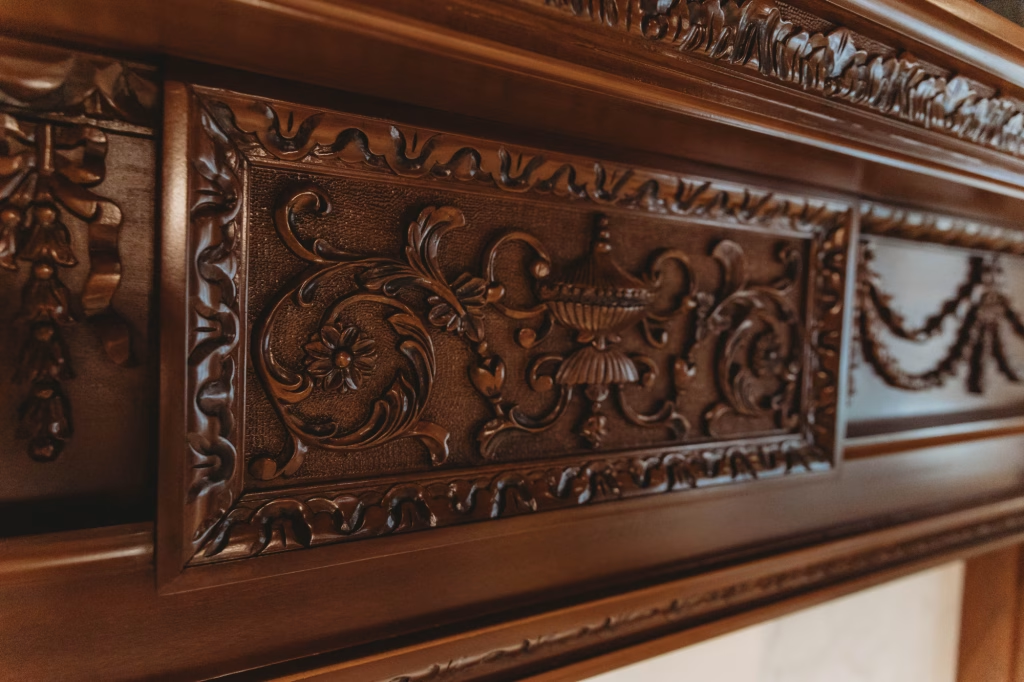
Millwork Gives a Room Its Architectural Identity
Walk into two rooms with similar dimensions, paint colors, and furniture, and they can still feel completely different. Architectural detailing is often the reason.
A room with custom wall paneling, substantial moldings, integrated cabinetry, and thoughtfully framed openings has a different sense of depth than one composed primarily of flat walls.
Millwork introduces lines, proportions, texture, and rhythm. It gives the eye places to travel and helps establish a sense of hierarchy within the room.
In a traditional interior, that might mean raised panels, detailed moldings, and rich wood finishes. Contemporary architectural millwork might use flush panels, clean reveals, concealed storage, and minimalist cabinetry.
The style can change completely, but the principle remains the same. Custom millwork gives architecture a recognizable identity.
Details Create a Sense of Intention
One of the hallmarks of high-end interior design is that nothing feels accidental.
Cabinetry aligns with surrounding architectural features. Moldings transition naturally between surfaces. Doors feel integrated into wall treatments. Materials and finishes repeat in subtle ways throughout the property.
Achieving this level of cohesion requires attention to details that may initially seem small.
Custom millwork makes it possible to control these relationships rather than relying on standard dimensions and mass-produced products.
When cabinetry, paneling, doors, and moldings are designed specifically for the project, the finished interior feels more considered from every angle.
Wall Paneling Can Transform an Entire Interior
Few architectural millwork elements can change a room as dramatically as custom wall paneling.
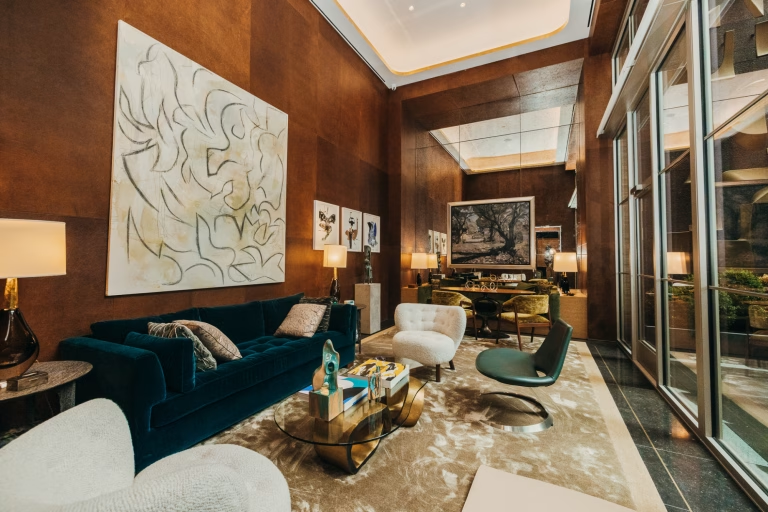
Paneling can introduce warmth, texture, pattern, and dimension while helping establish the style of the interior. Depending on the design, it can feel historic and traditional, clean and contemporary, or somewhere in between.
Wainscoting can bring classic character to a dining room or hallway. Natural wood panels can add warmth to a modern living room. Fluted or tambour woodwork introduces movement and texture. Flush paneling can create a sophisticated backdrop while concealing doors or storage.
In commercial interior design, architectural wall paneling can also reinforce a brand identity and create memorable guest experiences.
Instead of treating walls as empty surfaces, custom millwork turns them into active components of the design.
Moldings Prove That Small Details Matter
Crown molding, base molding, trim, and casings may not always be the first things someone notices when entering a room. Their absence, however, can dramatically change how finished that room feels.
Moldings create visual transitions between walls, floors, ceilings, doors, and windows. Their scale and profile can influence the perceived proportions of the entire space.
For historic NYC homes, custom molding can preserve or complement original architectural character. In contemporary interiors, simplified profiles can provide subtle definition without adding excessive ornamentation.
This is one of the reasons architectural details matter so much. They do not necessarily need to demand attention to have an impact.
Custom Built-Ins Combine Architecture and Function
Some of the most successful millwork does more than add character. It solves a practical problem at the same time.
Custom built-ins are a perfect example.
A floor-to-ceiling library can provide significant storage while becoming the visual centerpiece of a living room. A window bench can transform an overlooked corner into seating and concealed storage. A custom entertainment center can organize technology while giving an otherwise blank wall architectural purpose.
In New York City interiors, where space is especially valuable, this combination of form and function is essential.
Custom built-ins can take advantage of unusual corners, tall ceilings, alcoves, structural elements, and other conditions that standard furniture may not accommodate.
The result is an interior that feels both more beautiful and more useful.
Materials Add Another Layer of Character
The material selected for custom millwork can dramatically change the mood of a space.
White oak can create warmth while maintaining a contemporary aesthetic. Walnut introduces richness and depth. Maple offers versatility, while mahogany can bring a classic sense of sophistication.
Painted finishes offer another range of possibilities, from crisp, understated cabinetry to dramatic statement colors.
Millwork can also be combined with glass, stone, metal, mirrors, upholstery, and specialty materials to create more complex architectural features.
Luxury is not necessarily about using the most elaborate material. It is about selecting the appropriate material and executing it exceptionally well.
Architectural Details Connect One Room to the Next
Custom millwork can also help create continuity throughout a residence or commercial property.
Repeating a particular wood species, molding profile, panel detail, or finish creates subtle relationships between different rooms.
A wood finish introduced in the kitchen might reappear on a dining room credenza. Wall paneling in an entryway might continue into the living room. Similar cabinetry details could appear in a home office, bedroom, or custom closet.
These repetitions help an interior feel cohesive without requiring every room to look identical.
The result is a property with its own architectural language.
Preserving Character in New York City Interiors
New York architecture offers an extraordinary variety of styles, from historic brownstones and pre-war apartments to industrial lofts and contemporary high-rises.
Custom architectural millwork provides a way to respect that context.
In historic properties, new millwork can complement existing moldings, doors, fireplaces, and paneling while adding the storage and functionality required for modern living.
In newer spaces, custom millwork can introduce architectural character where very little existed originally.
This ability to work with the architecture rather than against it is one of the greatest benefits of custom millwork in NYC.
Millwork Defines Commercial Spaces Too
Architectural details are equally important in restaurants, hotels, retail environments, offices, and other commercial interiors.
Custom commercial millwork can help establish the atmosphere guests experience from the moment they enter.
A beautifully crafted restaurant bar can become the visual centerpiece of a dining room. Custom hotel millwork can transform a lobby into a memorable arrival experience. Retail display cabinetry can reinforce a luxury brand while showcasing merchandise. A custom reception desk can establish professionalism and identity in an office environment.
These architectural features help distinguish a business from competitors and make the physical space part of the overall brand experience.
Craftsmanship Makes the Details Work
A beautiful design is only as successful as its execution.
Architectural millwork requires precision because even small inconsistencies can affect the finished appearance. Panel alignments, grain direction, reveals, joints, hardware placement, and finish quality all contribute to the final result.
This is where experienced millwork craftsmanship becomes essential.
Custom millwork brings together design, material knowledge, fabrication, finishing, and installation. Each phase requires careful coordination to ensure that the finished product works seamlessly with the surrounding architecture.
When those elements come together successfully, the craftsmanship may appear effortless. Behind that simplicity is an extraordinary amount of planning and skill.
Why Millwork Ultimately Defines a Space
Furniture and décor can certainly give an interior personality, but architectural millwork goes deeper. It becomes part of the space itself.
It frames doors and windows. It defines walls and ceilings. It provides storage. It creates focal points. It introduces material, texture, and proportion. Most importantly, it gives designers and property owners the opportunity to create architectural details that belong specifically to that environment.
That is why custom millwork remains such an important part of luxury residential design, hospitality interiors, restaurants, retail spaces, and high-end commercial projects.
At New York Custom Interior Millwork, we specialize in bringing those details to life through custom cabinetry, built-ins, architectural wall paneling, moldings, specialty woodwork, and commercial millwork. We collaborate with homeowners, interior designers, architects, contractors, and commercial clients throughout New York City and beyond to create spaces where craftsmanship can be seen and felt in every detail.
If you are planning a residential or commercial interior and want to explore how custom architectural millwork can give your space greater character, functionality, and distinction, contact New York Custom Interior Millwork at (718) 392-1600 or email liz@nycmillwork.com. Great interiors are built from the details, and the right details can define an entire space.